For more than two decades, my work in Latin America has focused on understanding and reducing violence in some of the Western Hemisphere’s most challenging security environments. Through partnerships with governments, international organizations, and local stakeholders, I have led large-scale research and evaluation projects in El Salvador, Honduras, and across the Northern Triangle. This work has examined gang dynamics, violence interruption strategies, youth risk and protective factors, family-based prevention models, employment interventions, and the broader transnational dimensions of organized crime. A consistent theme across these projects is the application of rigorous research designs—including randomized controlled trials, risk assessment validation, interviews with active offenders, and time-series analysis—to inform policy and practice in high-violence settings. My current work extends this research agenda to the study of Tren de Aragua (TDA), examining its transnational criminal capacity, governance strategies, and implications for regional and U.S. security.
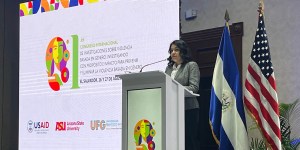
LibrES: “For an El Salvador without Gender-Based Violence” – El Salvador (2022 to 2025)
This project was funded by a $35 million, five-year cooperative agreement awarded by the U.S. Agency for International Development (USAID). The USAID LibrES activity aimed to eliminate Gender Based Violence in El Salvador. ASU led LibrES in collaboration with seven partners. The Activity had two tiers of results: firstly, it aims to reduce violence against women and vulnerable populations, improve perceptions of safety and security, and decrease illegal migration. Secondly, it aimed to establish innovative approaches and ensure long-term sustainability to benefit collaborating organizations. The Activity had three main objectives: prevention of GBV, protection of GBV victims and survivors, and prosecution/accountability for GBV perpetrators.

Honduras Justice, Human Rights, and Security Strengthening (2017 to 2019)
Through a subcontract with Development Assistance International (DAI), Dr. Katz provided research, technical assistance, and training to support Unidos Por La Justicia, a major USAID-funded development project in Honduras. Unidos Por La Justica, a rule of law-focused project, provided Honduras with assistance to improve social justice, safety, and security. Dr. Katz is engaged in projects related to community policing as well as research on homicide and crimes against women. He also led a project with the National Police College of Honduras to build research capacity by developing and delivering Applied Research Training (ART) to Honduras police personnel
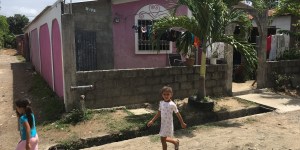
Honduras – Development of the IMC Risk Assessment Instrument (2016-2019)
To support data-driven prevention programming, Dr. Katz and his team developed and validated the Honduran Instrumento de Medición del Comportamiento (IMC), a culturally adapted behavioral risk and protective factor assessment tool. The IMC measures youth risk across individual, family, peer, school, and community domains and provides empirically derived cut-points for program eligibility. This work marked one of the first locally validated criminological risk assessment tools in the Northern Triangle, strengthening the capacity of service providers and policymakers to allocate prevention resources based on measurable need rather than anecdote or ideology.

Honduras – Proponte Más Randomized Controlled Trial (2016-2019)
My evaluation of Proponte Más represented the first randomized controlled trial of a family-based violence prevention program conducted in Central America. Implemented in high-violence communities in Honduras, the project funded by USAID tested whether structured family counseling could reduce youth risk factors associated with gang involvement and delinquency. The study demonstrated measurable improvements in family functioning and reductions in risk exposure, providing rare experimental evidence that prevention science can be successfully implemented in fragile, high-crime environments. This project helped establish that rigorous evaluation is both feasible and necessary for Latin American violence-prevention policy.
Assessing the Transnational Criminal Capacity of MS-13 in the United States and El Salvador
This NIJ-funded study, led by Dr. Edward Maguire, replicated and extended Charles Katz’s prior research for the U.S. Department of Homeland Security, which assessed the structure and transnational capacity of MS-13. Employing surveys of law enforcement gang experts, interviews with gang members, stakeholder interviews, and social network analysis in Los Angeles, Washington, DC, and San Salvador, the project examined gang organization, recruitment, and cross-border connections. The findings indicated that MS-13 predominantly functions as loosely connected local cliques with limited centralized control or enduring transnational criminal capacity. This challenges prevailing policy narratives and provides insights for more targeted prevention, enforcement, and intervention strategies.

El Salvador – Youth Employment and Violence Prevention Study (2014-2016)
In El Salvador, and supported by USAID, Dr. Katz led a team of eight graduate students to rapidly evaluate youth employment intervention programming aimed at reducing violence involvement by enhancing workforce readiness and economic opportunities among high-risk youth. The study examined whether structured job training, placement support, and employer engagement could bolster protective factors and decrease delinquency risk in some of the country’s most violence-affected communities. Employing rigorous analytical methods, the findings indicated that employment programs can enhance future orientation and economic attachment; however, their effectiveness in preventing violence depends on precise targeting, sustained engagement, and integration with broader support systems. This project contributed to clarifying the realistic role that employment initiatives can play within comprehensive violence prevention strategies.
El Salvador – Youth Risk and Protective Factors Study (2014-2016)
Complementing the employment evaluation, Dr. Katz and his team conducted a comprehensive study of youth risk and protective factors in El Salvador to better understand the drivers of violence and gang involvement. Drawing on multi-domain measurement across individual, family, peer, school, and community contexts, the study identified the constellation of factors most strongly associated with delinquency and gang participation. The findings reinforced the importance of family functioning, peer networks, and neighborhood exposure in shaping youth trajectories, while also highlighting protective mechanisms that can be strengthened through policy intervention. This work provided empirical grounding for prevention programming in El Salvador, helping shift policy discussions toward measurable risk reduction rather than relying solely on reactive enforcement.
El Salvador – Evaluation of the Gang Truce (2014-2016)
Sponsored by USAID, the evaluation of the Salvadoran gang truce provided the first rigorous analysis of a nationally brokered gang ceasefire in Central America. Using official homicide data and advanced statistical modeling, the study found a substantial short-term reduction in homicides following the truce, while also identifying structural and political vulnerabilities that limited long-term sustainability. This work contributed to global debates on violence interruption, state–gang negotiation, and the role of third-party brokers, offering evidence-based lessons for governments considering nontraditional violence reduction strategies.

Central American gangs as a proxy for third-country nationals promoting politically-motivated violence in the U.S. (2009-2011)
Going beyond a doorstep defense of U.S. security requires developing strategic responses to serious threats at some distance from U.S. borders. One such threat is that of third-country nationals who use Mexican territory as a gateway to enter the United States, often legally, to engage in criminal activity or to commit political violence. This project, funded by the U.S. Department of Homeland Security, extended existing studies of transnational criminal gangs in Central America to anticipate methods and approaches that could be used by third-country nationals to enter the US to commit politically motivated violence in the United States. The study encompassed interviews with over 100 active MS13 gang members in Santa Tecla, El Salvador; more than four Salvadorans detained in the United States and being deported to El Salvador; dozens of law enforcement officials from the United States and El Salvador; as well as intelligence data from the DHS ICE National Gang Unit.
 Site Title