Providing Technical Assistance to the Youth Resilience, Inclusion, and Empowerment (Y-RIE) program (2022-present)
Since 2022 Ihave served and provided recurring short-term Technical Assistance (STTA) insupport of the Y-RIE program in St. Lucia, Grenada, and Guyana, which USAID sponsors.I am responsible for supporting the inception phase and working with Y-RIE and develop and validate the Caribbean-specific risk assessment instrument. In doing so, I am collaborating with faculty and staff from the University of West Indies to build capacity in the adaptation and application of the risk assessment tool. Iwill also conduct training on implementingthe risk assessment tool for local stakeholders and partners. Currently, Dr. Katz is a technical advisor to the Y-RIE program. He is responsible for providing technical advice on community selection and validating the Y-RISC instrument to identify high-risk youth in need of social services.
Crime Analysis Training for English and Dutch-Speaking Caribbean Nations (2019-2021)
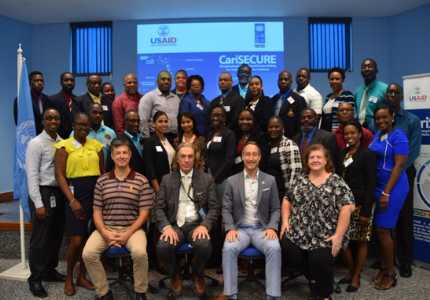
I was the principal investigator and led crime analysis instructor for the CariSECURE crime analysis project from 2019 through 2021. The goal of the project was to enhance organizational capacity within each of the 9 English-Speaking Caribbean nations and Suriname to use applied crime analysis to generate, analyze, and report data to inform police operations and decision-making as well as policy development. My graduate students and I provided about 360 hours of training to just under 30 Caribbean crime analysts across the region so that they could understand, participate and carry out crime analysis concepts and methods, and enabled them to formulate and address problems of interest to their police service and nation. Each of the trainees, except those from Trinidad and Tobago, served as their nation’s first crime analysts.

Change Management Consultation to UNDP’s CariSECURE Program (2018-2019)
In 2018 and 2019, I completed work serving as a change management consultant to the CariSECURE project administered by the UNDP and sponsored by USAID. CariSECURE involved 10 Eastern and Southern Caribbean countries in strengthening national and regional institutions to collect, analyze and use police data to implement data-driven and evidence-based policies and programs. As part of my work on the project, I conducted a complexity of change assessment. The assessment included an evaluation of the region’s readiness for change and detailed the potential challenges policymakers and police leaders might experience when implementing the Police Records Management Information System (PRMIS), which is to replace paper police reports eventually.When I worked on the project, I also served as a technical advisor in establishing the RSS Regional Crime Observatory, designed to assist in reducing national and regional crime levels through crime analysis.
Research and evaluation services for the Community, Family, and Youth Resilience Program (2017-2020)
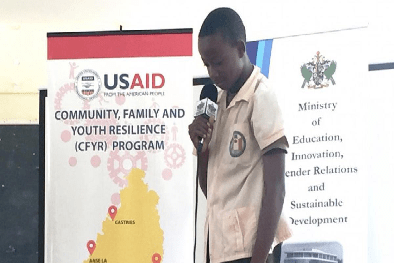
From 2017 through 2020, I served as an external evaluation advisor to the Community, Family, and Youth Resilience Program (CFYR)and provided technical Assistance on the adaption of the YSET-a risk assessment tool to identify at-risk youth for program services- to specialists in the three program nations: Saint Kitts and Nevis, Saint Lucia, and Guyana. The primary goal of CFYR was to reduce youth involvement in violence and reduce risk and increase protective factors associated with violence among youth. My team and I’s work on the project resulted in an internal evaluation of the Family Matters program using a randomized control trial, a report that assessed and validity and reliability of the YSET, and training local program specialists on the use of the revised YSET tool.
Prevalence and Patterns of Troublesome Youth Groups in the Caribbean (2012-2016)
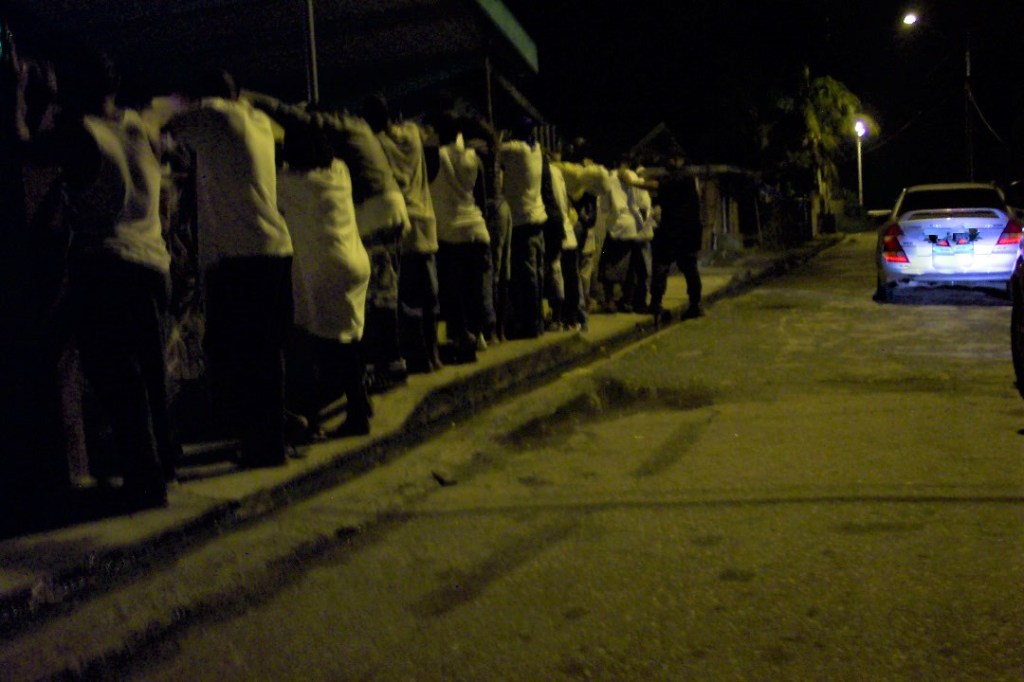
In 2012, I embarked on a pro bono project with the Regional Security System (RSS) to conduct rigorous Research in pursuit of an understanding of the scope and nature of TYGs (aka gangs) and TYG violence in the Eastern Caribbean—a mandate given to them by the Caribbean Council of Ministers. The seven nations comprising the RSS (Barbados, Antigua and Barbuda, St. Vincent and the Grenadines, St. Lucia, St. Kitts and Nevis, Commonwealth of Dominica, and Grenada) requested that the RSS conduct an assessment to determine whether resources should be dedicated to addressing the problem and, if so, that it recommend a course of action. Upon their request for Assistance, we implemented a multi-methodological approach that included surveys of school youth, juvenile detainees, and police experts; interviews with key stakeholders; and official homicide data, along with data previously collected through the Latin American Public Opinion Survey.Following the initiation of the RSS TYG assessment, the United States Agency for International Development (USAID) engaged the RSS to fund and expand the scope of activity to include Guyana and Trinidad and Tobago.
Assessing Citizen Insecurity throughout the Caribbean for the UNDP (2011-2012)
Around 2011 I collaborated with a team of Caribbean criminologists led by Anthony Harriott on a project funded by the United Nations Development Program (UNDP) to assess citizen insecurity throughout the Caribbean. I was responsible for working with national experts across the region to report on street gangs and organized crime across the English and Dutch Speaking Caribbean. The Research was included as Chapter 3, “Reducing the Contribution of Street Gangs and Organized Crime to Violence” the UNDP’s 2012 Caribbean Human Development Report.
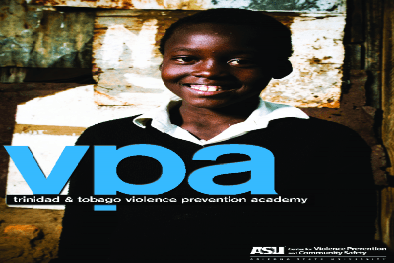
The Violence Prevention Academy (VPA) (2008-2010)
In 2008 the Violence Prevention Academy (VPA) was designed to train school-based personnel to develop comprehensive, integrated, evidence-based violence prevention plans tailored to the specific needs of participating Trinidadian schools. The Academy is structured around four components: (1) a training program, (2) the development of a school-based violence prevention plan for each participating school, (3) the implementation of the violence prevention plans, and (4) a formal evaluation of the implementation and impact of each school’s plan. The training component consists of four sessions that familiarize participants with the violence prevention planning process. Assisted by Academy staff, following each training module, participants apply the knowledge gained to develop and carry out violence prevention plans for their own schools. The Academy was sponsored by the Republic of Trinidad and Tobago’s Ministry of Education and was implemented in 25 Trinidad and Tobago schools.
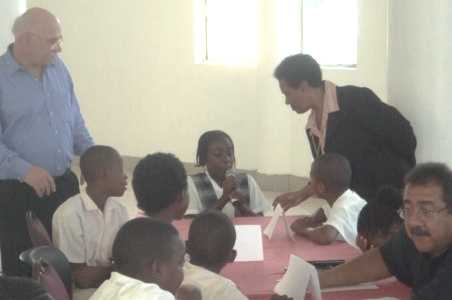
Diagnosing and Responding to Street Gangs in Antigua and Barbuda (2008)
In June 2008, the OAS Department of Public Security received a formal request from the Government of Antigua and Barbudato assess the gang situation in Antigua and Barbuda and formulate recommendations for addressing the problem. I served as one of three team members who diagnosed the nation’s gang problem and its capacity to respond to it. Recommendations for capacity building to respond to gangs were provided to the government of Antigua and Barbuda.
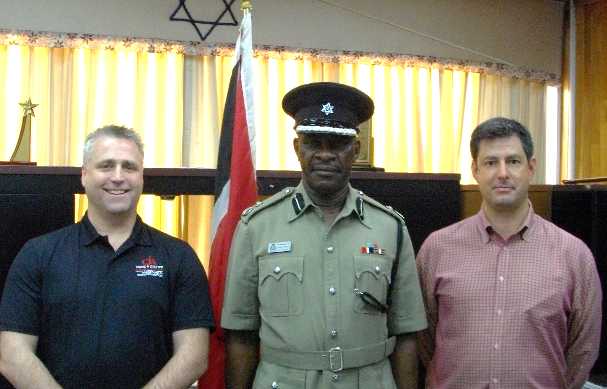
Provision of Technical Assistance to the Ministry of National Security of the Republic of Trinidad and Tobago (2005-2010)
From about 2005 through early 2010, team members from Arizona State University, George Mason University, Sam Houston State University, and the University of North Carolina at Charlotteworked with the Ministry of National Security of the Republic of Trinidad and Tobago to develop a comprehensive strategic plan to address the nation’s violence problem. As part of the project, I developed a multi-methodological strategy to diagnose the nation’s gang problem and directed the development of a nation-specific comprehensive response to violent gangs. In addition, the team implemented several reforms in the TTPS that included a Homicide Prevention Working Group, a gang unit, Crime and Problem Analysis Unit (CAPA), a homicide unit, Integrated Ballistic Information Network, and community and problem-oriented policing.
 Site Title